President, Confluence PSG
Most groups that are brought together to solve a hard problem want to start negotiating immediately. That instinct is understandable. The people in the room are experienced. They have positions. They have organizational mandates and limited time. They are ready to get to work.
The problem is that they are usually ready to get to the wrong work.
At Confluence PSG, the process we use for high-stakes, multi-stakeholder decision making is called a Collaborative Decision Making Process, or CDMP. We developed it over more than fifty work groups and task forces, refined it across issue areas ranging from AI governance to transit reform to healthcare policy, and it is the framework that underlies everything described in this post. The CDMP is built on a discipline that cuts against most people’s instincts about how negotiation works: the harder work comes before the negotiation, not during it. Getting that order right is what separates processes that produce durable outcomes from processes that produce durable resentment.
Two recent engagements illustrate what that discipline looks like in practice and why the entry point changes depending on the nature of the problem.
The RTD Accountability Committee was a 14-member body charged with recommending reforms to one of the largest regional transit agencies in the country. The charge was broad: evaluate governance, workforce retention, and paratransit services and make recommendations the legislature and the agency could act on.
The committee did not arrive with a shared diagnosis. Members had four different theories of what was wrong, and those theories implied four different kinds of solutions. Getting directly into proposals would have meant asking people to vote before they understood what they were actually negotiating about.
The process started somewhere different. Before anyone proposed anything, the committee spent sessions building a shared understanding of the problem. What were the actual challenges RTD faced? What values needed to guide any solution? What did democratic accountability require, and what did operational effectiveness require, and what happened when those two things pulled in different directions?
From that foundation, the committee moved into what the CDMP calls ideas for consideration. These are distinct from proposals. A proposal is a formal, specific idea someone believes should be considered and acted on. Ideas for consideration are earlier and looser than that. Someone raises one by saying “this might be worth exploring” rather than “I believe this is the solution.” When enough ideas have been examined, stress-tested, and narrowed, the group moves to formal motions, which under the bylaws require a mover, a seconder, discussion, and a vote. But ideas for consideration come before any of that. Nobody is locked in. Nobody is being lobbied. The room’s orientation shifts from judgment to inquiry.
Every time an idea for consideration was raised, the question that followed was the same: what do you need to learn, discuss, or hear from someone in order to assess this idea and stress-test it? That question reframes evaluation as information-gathering rather than position-taking. Members who might otherwise have argued against an idea instead said “I’m not ruling that out, but I’d like to see research on how peer agencies handle this” or “I’d want to hear from someone who has actually managed this kind of appointment process before I can assess it.”
The committee brought in data. They heard from transit board members in other regions. They received presentations from officials with direct operational knowledge of the specific mechanisms under consideration. One presentation shifted the majority’s thinking entirely. A structural solution the group had been leaning toward turned out to solve a different problem than the one they were actually trying to address. The evidence changed the question, and when the question changed, the answer the group had been circling moved with it.
This process takes longer than moving directly to proposals. On the RTD work, the committee ran a full month longer than planned because new ideas kept surfacing and members kept identifying things they needed to know before they could commit. At a certain point, the facilitator had to draw a hard line: at the next session, we will be shortening this list. We cannot continue exploration indefinitely. I need to know in the next few days everything it will take for you to be ready to vote. Managing that boundary is one of the harder parts of the facilitator’s job, and it does not always go smoothly. But the alternative, forcing votes before the room is genuinely ready, produces outcomes that unravel.
On board structure specifically, members who opposed Governor appointments accepted them once Senate confirmation was built in as a democratic backstop. Members who opposed restructuring the board at all accepted the new hybrid structure once specific expertise requirements were designed into it. They gave something. They got something. The trades addressed what people actually needed, not just what they had said they wanted.
The Colorado AI Policy Working Group had a different entry point. The Governor’s charge to the group was specific in its outcomes and deliberately open in its means: develop a policy framework that protects consumers and allows Colorado’s culture of innovation to thrive, look beyond the structure of the existing law, and prioritize evidence-based solutions that avoid ambiguity and align with national standards.
That framing was not an accident. Anchoring the group’s work in outcomes rather than a specific bill created conditions for genuine negotiation. The group was not asked to fix or modify what existed. It was asked to build from the ground up.
When the working group convened, Berrick Abramson opened by being direct about what was not going to happen. “I know a lot of you are eager to dive into drafting and negotiating. I know you’re more accustomed to a process where someone comes with a first draft and everyone else negotiates from it. We are going to take a wholly different approach.” The group was asked to start by sharing what each person cared about in this issue and why. Not what they wanted in the bill. Why it mattered to them and what it was meant to accomplish.
Every stakeholder made their reasoning visible to the rest of the room. Consumer advocates explained what harms they were trying to prevent and for whom. Technology developers explained what operational realities made certain requirements unworkable and why. Business associations explained what compliance uncertainty cost them and what clarity would make possible. When the reasoning is visible, the range of solutions that address the actual need becomes larger than the range of solutions that address the stated position.
From there, the group identified the key levers: what decisions, systems, and processes should be covered, what should be explicitly excluded, and what should happen at each step. With that big-picture framework negotiated, the group moved into the harder work of negotiating the details.
Those details were genuinely hard, and the negotiation that produced the final framework was real horse trading. Businesses were willing to move from a higher trigger standard, significant factor or principal basis, all the way to materially influenced a consequential decision, but only if they received concessions on the liability provisions and on which systems and decisions were covered at all. Consumer advocates were willing to accept narrower coverage of systems and decisions, but only if businesses and technology stakeholders gave ground on enforcement, the right to correct inaccurate personal data, and the scope of required disclosures. Each trade required the other. Neither side got everything it came in wanting. Everyone got something they genuinely needed.
That kind of exchange is only possible once every party’s reasoning is visible to the room. You cannot offer a concession on liability if you do not understand why the other party needs it. You cannot accept narrower coverage if you do not know what you are getting in exchange and why it addresses the harm you came in to prevent. The earlier work, making reasoning visible before forcing choice, is what made the horse trading possible.
The working group reached unanimous support for its framework. That framework passed both chambers of the Colorado General Assembly with no substantive amendments. As one working group member said in committee testimony, tradeoffs and concessions were made on all sides, and any modifications not in line with what came out of the working group must be thoroughly vetted, as they may disrupt the balance and compromise that has been created.
Two processes, two different rooms, two different entry points. RTD required significant diagnostic work before the group could generate meaningful options. The AI working group had a clearer starting mandate and moved more directly into what that mandate required from each stakeholder’s perspective. Both involved real negotiation, and both produced outcomes through genuine trade.
The underlying discipline was the same in both. Make reasoning visible before forcing choice. Generate options before demanding commitment. Build a shared evidentiary foundation before asking people to vote. And be willing to slow down at the moments when the instinct is to speed up, because those are usually the moments when the room is not yet ready.
Most hard problems are not hard because the people involved lack expertise or good faith. They are hard because the people involved have not yet had the conditions to understand what the other parties actually need and why. Creating those conditions is not a preliminary step before the real work begins. It is the real work.
More on the specifics of both processes in the weeks ahead.

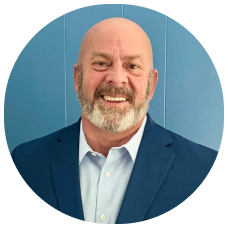
Berrick Abramson has designed and facilitated more than 50 work groups, task forces, and multi-stakeholder processes across AI governance, transit, healthcare, education, criminal justice, disability rights, wildfire resilience, and workforce development. He serves on the Colorado Commission on Higher Education, appointed by Governor Polis in 2019 and reappointed in 2023.