Task force reports, strategic plans, and whitepapers produced through Confluence PSG processes. Most facilitated processes produce a report. These are the reports that also changed laws, rewrote codes, reset agency policies, and redesigned systems.
Confluence PSG Whitepaper • State Governance
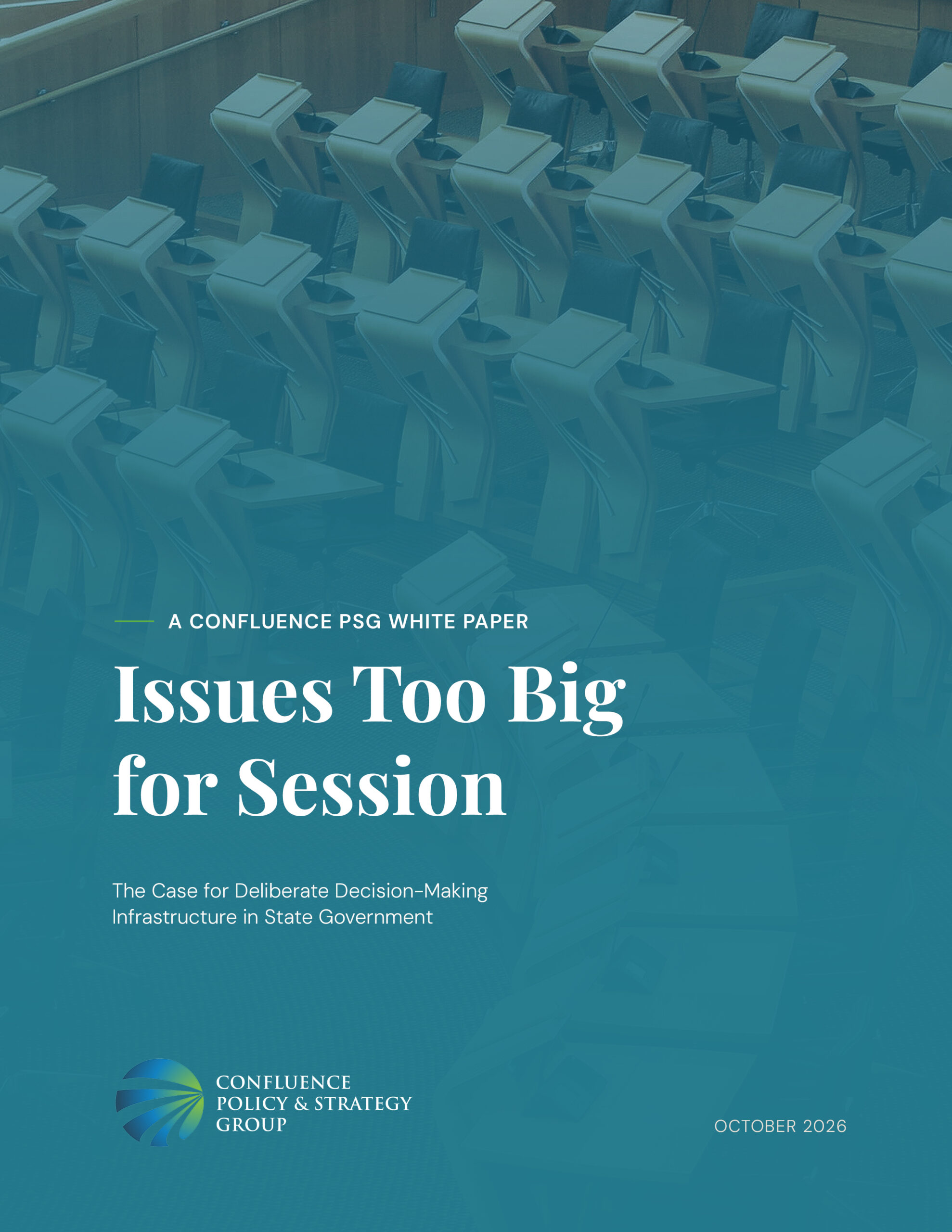
Issues Too Big for Session
Some issues do not fit inside a legislative session, and the reason has little to do with the legislators working on them. This paper draws on examples from across the country and closes with six questions any legislator, governor, or agency head can ask about the issue on their desk.
Published reports from Confluence-facilitated processes
Good Government · Transportation
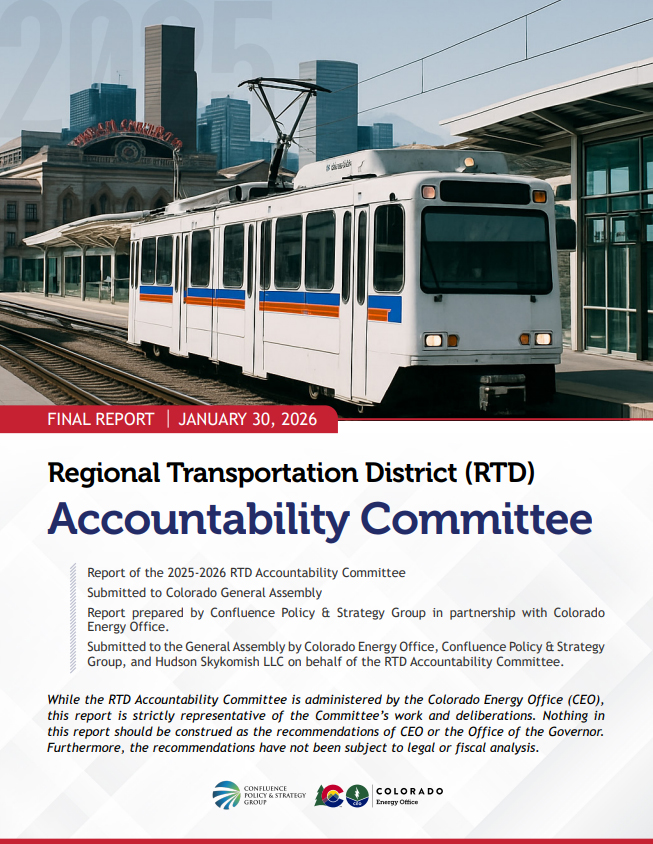
RTD Accountability Committee, Final Report
The complete findings and 31 recommendations of the RTD Accountability Committee, including the restructured nine-member hybrid board governance proposal codified in SB26-150.
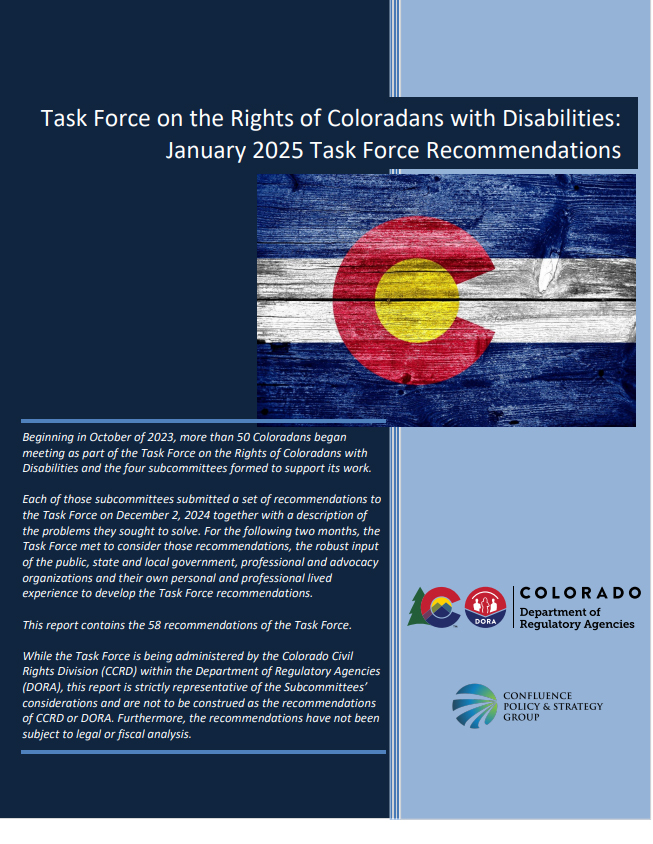
Task Force on the Rights of Coloradans with Disabilities, Final Report
Fifty-eight recommendations across four simultaneous subcommittees covering government accessibility, housing, outdoor access, and a full rewrite of Colorado’s civil rights statutes for persons with disabilities.
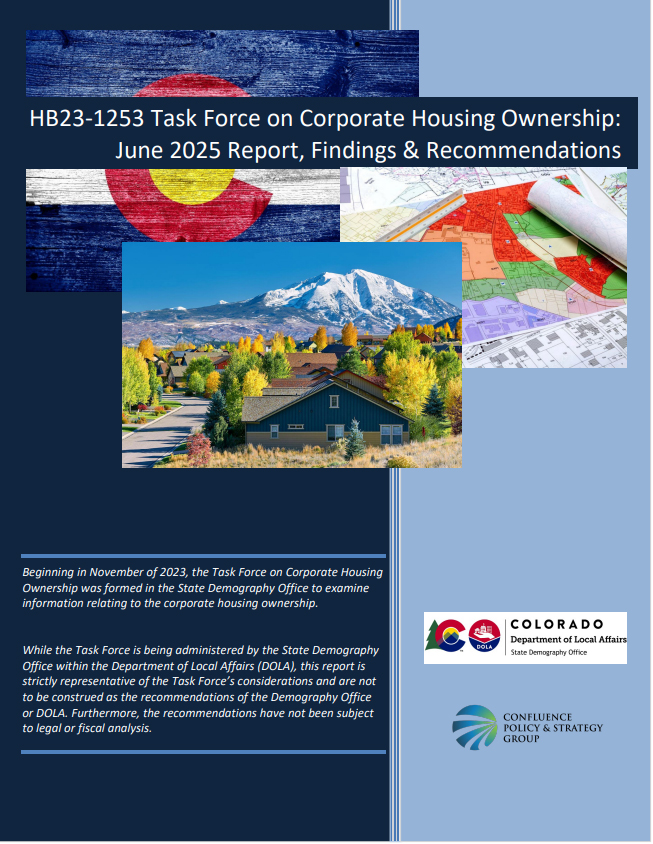
Task Force to Study Corporate Housing Ownership, Report, Findings & Recommendations
Findings and legislative recommendations on the effect of corporate ownership of residential real estate on communities across Colorado, produced for the State Demography Office.
Colorado Educator Safety Task Force, Roadmap for Action
Findings and role-specific roadmaps from the 17-member task force, including the survey of more than 1,100 educators whose results contradicted all prior available data on educator safety.
Working Group on Transforming Criminal & Juvenile Justice, Final Report
Consensus recommendations from the 17-member working group on the mission, vision, structure, and membership for two new permanent commissions to replace the Colorado Commission on Criminal and Juvenile Justice.
Colorado Safer Schools Initiative, Safer Schools & School Communities Report
Findings and strategies from Colorado’s largest working group of education stakeholders, with more than 250 members, on reducing violence involving students at the school, system, and community levels.
Colorado Interagency Work Group on School Safety, Final Report
A Framework for Colorado State Government’s Approach to School Safety, containing more than fifty actions organized around the findings of six subcommittees. The approach has drawn interest from state and federal officials across the country.
Published reports from Confluence-facilitated processes
Strategic Planning · State Government
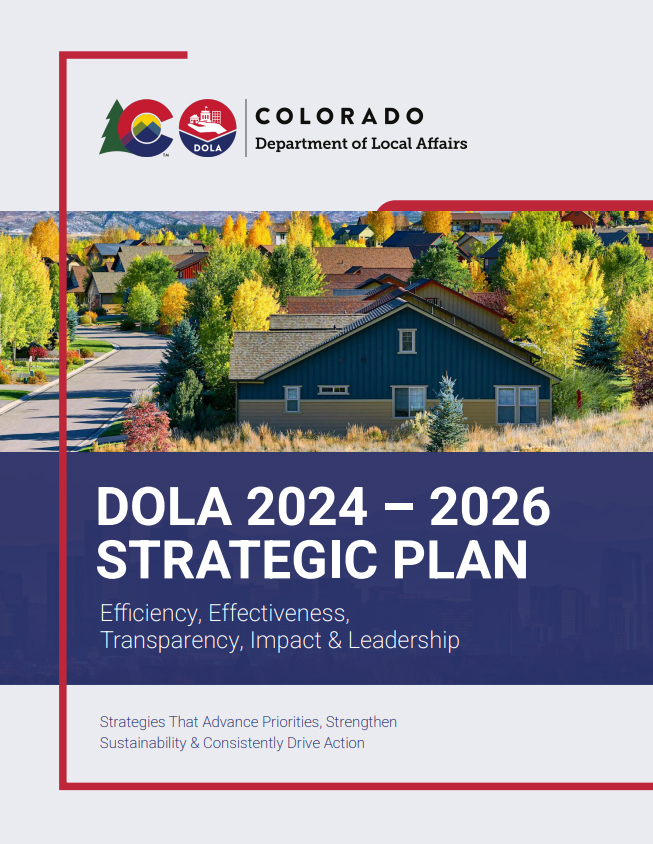
Colorado Department of Local Affairs, 2024–2026 Strategic Plan
A three-year strategic plan produced through a multi-phase process including individual leadership interviews, two retreats, all-staff sessions, and division-level engagement.
A three-year strategic plan produced through a multi-day Council retreat and ongoing subcommittee facilitation, advising the Governor and legislature on juvenile justice priorities.
State agency leaders, Governor’s offices, county governments, and organizations navigating problems that have resisted every standard approach reach out directly. The engagement starts with a conversation.