50+ work groups. One methodology. Results that hold.
The Collaborative Decision Making Process.
Some rooms are too important to fail.
Confluence PSG is the firm that gets called to move them.

Some rooms are too important to remain gridlocked. Confluence PSG moves them.

Some problems arrive after every other approach has already failed. Three legislative sessions could not produce an AI governance framework. Years of discussion could not move transit governance reform. A twenty-year criminal justice commission was about to sunset without a successor. These are the engagements that define Confluence: high-stakes, politically complex, too important to fail, brought to the firm when the standard processes have run out.

Other problems arrive earlier, but they are no less consequential. Educators reporting unsafe classrooms for years while available data missed what was actually happening. People with disabilities waiting decades for civil rights statutes to reflect their actual lives. Students in a school system rebuilding after two hurricanes, needing career pathways that produced real opportunity. These rooms require the same process discipline, applied to a different kind of stuck.

The methodology that moves both kinds of rooms is the Collaborative Decision Making Process, a structured framework developed over more than fifty work groups and task forces. It is not generic facilitation. It is a deliberate sequence: trust and shared norms before substance, alignment on the actual problem before proposals, evidence before positions, ideas before ideology, and language negotiation at the end rather than position-taking at the beginning. That sequence is why rooms that have been gridlocked for years reach unanimous conclusions.

Confluence also does the full range of work that demands the same discipline: strategic planning for state agencies and enterprises, stakeholder engagement at scale, organizational assessment, and conflict navigation across sectors. The same approach that moves a contentious policy room moves a leadership team that has stopped being honest with itself.

Our Services

The most consequential collaborative processes fail not because the people in them are unreasonable but because the process was designed wrong. Confluence designs and leads multi-stakeholder working groups and task forces using the Collaborative Decision Making Process, a structured framework built to move rooms that standard facilitation cannot. The documented results include unanimous agreement among parties who had been in direct opposition for years, super-majority votes on questions that had previously failed, and legislation signed into law that three prior attempts could not produce.

Stakeholder engagement done well is a source of information that decision-makers cannot get any other way. Done poorly, it produces managed responses that confirm what the client already believed and leaves affected communities feeling their participation was theater. Confluence designs engagement programs built around honest input: the right people, the right conditions, and a process that gives what is heard genuine influence over what gets decided. Engagements have ranged from statewide listening tours shaping the prioritization of $3.8 billion in federal funds to targeted small-group sessions surfacing findings that contradicted everything prior data had shown.

A plan built by consultants and presented to leadership is not a plan the organization will use. A plan built through genuine engagement with the people responsible for executing it is. Confluence designs strategic planning processes for state agencies, government enterprises, county governments, and membership organizations that produce ownership alongside the document. The measure of success is not the plan. It is whether the organization is still using it twelve months later.

Reaching consensus requires more than a vote at the end of a process. It requires visible reasoning, shared understanding of the actual problem, and language that each party can defend to its own constituency. Confluence builds that foundation before asking for agreement, which is why the agreements that result tend to hold. The coalition that emerged from the Colorado AI governance process included the ACLU, the Colorado Cross-Disability Coalition, the Colorado Chamber of Commerce, and Google, each holding a framework none of them would have written alone.

When a process has broken down and parties have stopped engaging honestly, standard facilitation is not enough. The intervention required addresses the history driving the present dynamic, creates space for what has not been said, and rebuilds the conditions for productive engagement before asking for agreement. Confluence has navigated conflict between state agencies and the communities they serve, between organizational divisions with competing priorities, and between parties with long histories of direct opposition.

Leaders facing significant transitions, performance questions, or cultural challenges need honest external perspective before they can plan effectively. The value is not neutrality for its own sake. It is the ability to ask questions that internal relationships make difficult and hear answers that hierarchy suppresses. Confluence designs assessments around the specific questions a leader needs answered, using individual interviews, staff surveys, document review, and facilitated group discussions calibrated to surface honest input rather than managed responses.

Expertise

The firm that gets called when every other approach has failed. More than fifty work groups and task forces managed across civil rights, education, criminal justice, transportation, public safety, housing, healthcare, and workforce development.

Experience

Governors, agency heads, legislators, and senior executives. Rooms with prosecutors and defense attorneys, technology companies and labor unions, civil rights organizations and business associations. Every level of government from municipal to federal, and several international engagements.

Results

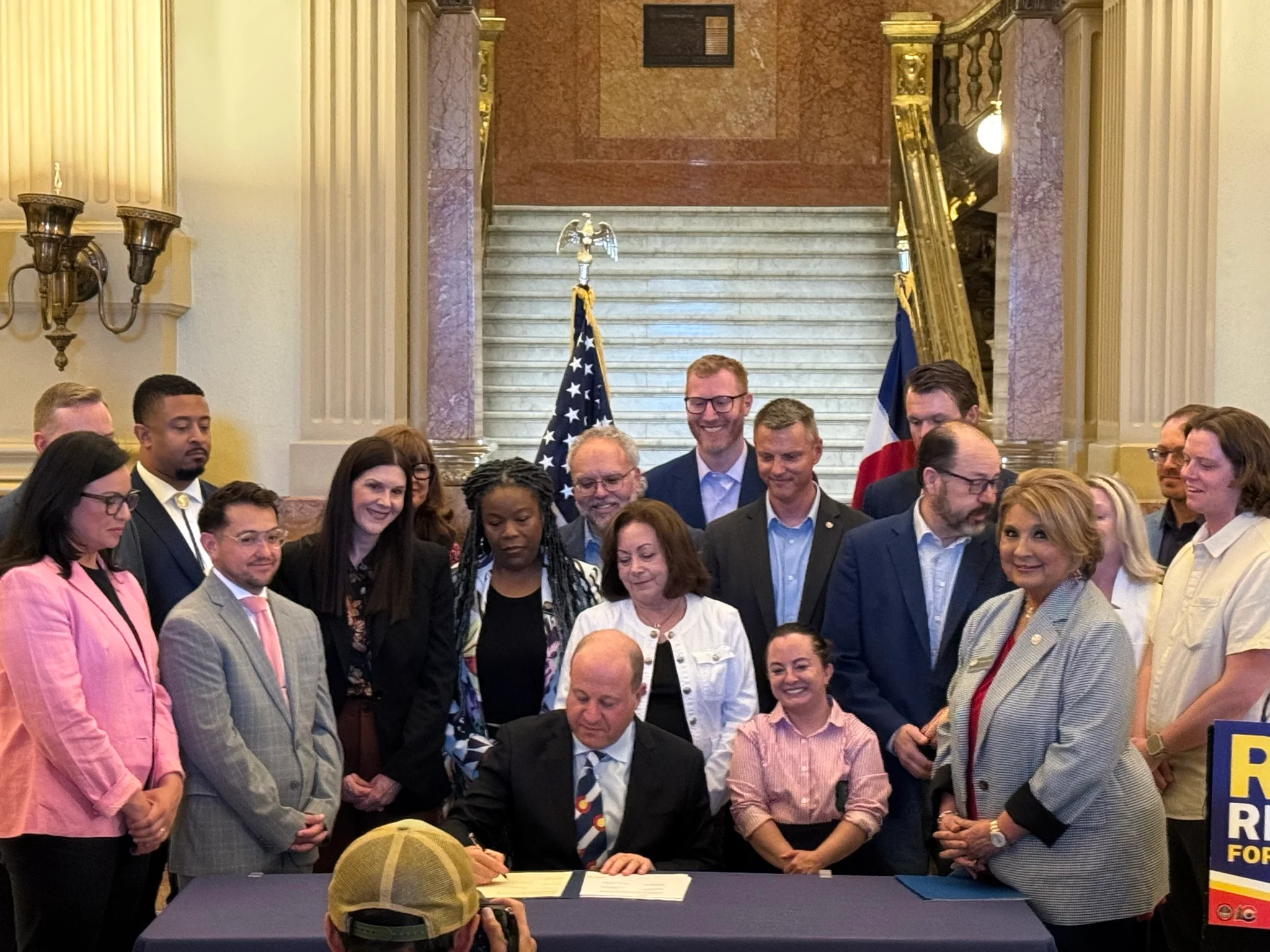
SB26-189 signed into law thirteen days after introduction, 34-1 and 57-6. Thirty-one RTD governance recommendations codified in legislation. Fifty-eight disability rights recommendations published. More than $95 million allocated from workforce task force recommendations. Over 100 regulatory, legislative, and corporate actions informed.

State Government

Confluence has served as process architect and neutral facilitator for Governor-convened working groups, legislatively created task forces, and state agency strategic planning at the highest levels of state government. The work ranges from multi-stakeholder policy frameworks signed into law to three-year agency strategic plans built through genuine staff and leadership engagement. State leaders bring Confluence in when the problem is too complex, too contentious, or too consequential to hand to a standard contractor, and when the outcome needs to hold after the process closes.

Local Government

City and county leaders face the same dynamics as state government in compressed form: competing constituencies, limited resources, and decisions that have to hold across a politically diverse community. Confluence has helped local leaders build regional consensus on housing, navigate transportation funding, establish budget priorities through structured community engagement, and design strategic plans that staff will actually implement. The work is grounded in the specific political realities of each community, not in frameworks imported from outside.

Public-Private Partnerships

Government and private sector leaders often need each other and distrust each other in equal measure. Confluence has the credibility on both sides to convene those rooms and the process discipline to produce agreements that each party can defend to its own constituency. Engagements have spanned economic development, workforce, education, transportation, housing, and technology governance.

Regional & Multi-Jurisdictional

Some problems do not stop at city or county lines. Confluence has designed and facilitated collaborative processes among municipalities, counties, regional bodies, and state agencies on issues where no single jurisdiction has the authority or the resources to act alone. The challenge in these rooms is not only reaching agreement. It is reaching agreement in a form that each participating jurisdiction can implement within its own governance structure.

Community, Non-Profit & NGO

Community organizations, advocacy groups, and nonprofits are often the most important voices in a collaborative process and the most likely to feel the process was designed without them in mind. Confluence designs processes where these voices shape outcomes rather than merely inform them. Several of the firm's most significant engagements have been anchored by community and nonprofit leadership rather than government conveners.

Multi-Stakeholder Coalitions

A task force that produces recommendations and then dissolves has done half the job. Confluence helps clients design coalitions and bodies with the structure, membership, and operating norms to sustain the work after the initial process closes. The Colorado AI governance framework was held after passage by a coalition that included the ACLU, the Colorado Cross-Disability Coalition, the Colorado Chamber of Commerce, and Google. That coalition did not form by accident. It was designed.

The Power of Collaboration

STAKEHOLDERS ENGAGED
0
WORK GROUPS/TASK FORCES MANAGED
0
MEETINGS PLANNED & FACILITATED
0
REGULATORY & POLICY CHANGES INFORMED
0

Confluence PSG partners with government and private sector leaders to support policy and system change.