In the fall of 2017, Hurricanes Irma and Maria made landfall in Puerto Rico within two weeks of each other. By the time I arrived on the island, the damage was not just physical. The teaching workforce was leaving. Recruited aggressively across the United States for their credentials and their Spanish language fluency, educators were departing a system that was already under strain before the storms hit. Students were returning to schools that in many cases could not reopen, in communities whose economic futures looked nothing like they had twelve months before.
I reached out to a contact at a prominent foundation with operations in Puerto Rico and Washington, D.C. She introduced me to Julia Keleher, Puerto Rico’s Secretary of Education. Julia called almost immediately. Her question was direct: what did I want to do to help? My answer was honest: I didn’t know exactly, but I knew I needed to be there and I was ready to get on a plane.
What emerged from that conversation was a problem that nobody had yet named clearly. Career and technical education programs across the Puerto Rico Department of Education were not aligned with where the economy was actually going. The sectors with the greatest number of PRDE courses and pathways were the ones with declining job opportunities. The sectors with the strongest employment outlook had almost no programs at all. The island was preparing students for a version of Puerto Rico that the hurricanes had accelerated into the past.
We decided that career pathways were the area with the least attention and an urgent need. And we decided to build something, fast, that would bring everyone who needed to be in the room into the same room at the same time.
That meant the Governor’s Office. The Department of Economic Development and Commerce. Every agency of state government. Local nonprofits and trade associations. Industriales de Puerto Rico, the Puerto Rico Manufacturers Association, agreed to host. When I reached out to Chef Jose Andres, who was already on the island feeding people through World Central Kitchen, his response was immediate: “What do you need and for how many?” He began connecting us to opportunities across the full supply chain, from farming and food wholesale to restaurants and retail. Marriott, Walmart, Microsoft, and Evertec all came to the table. Dozens of local businesses did the same.
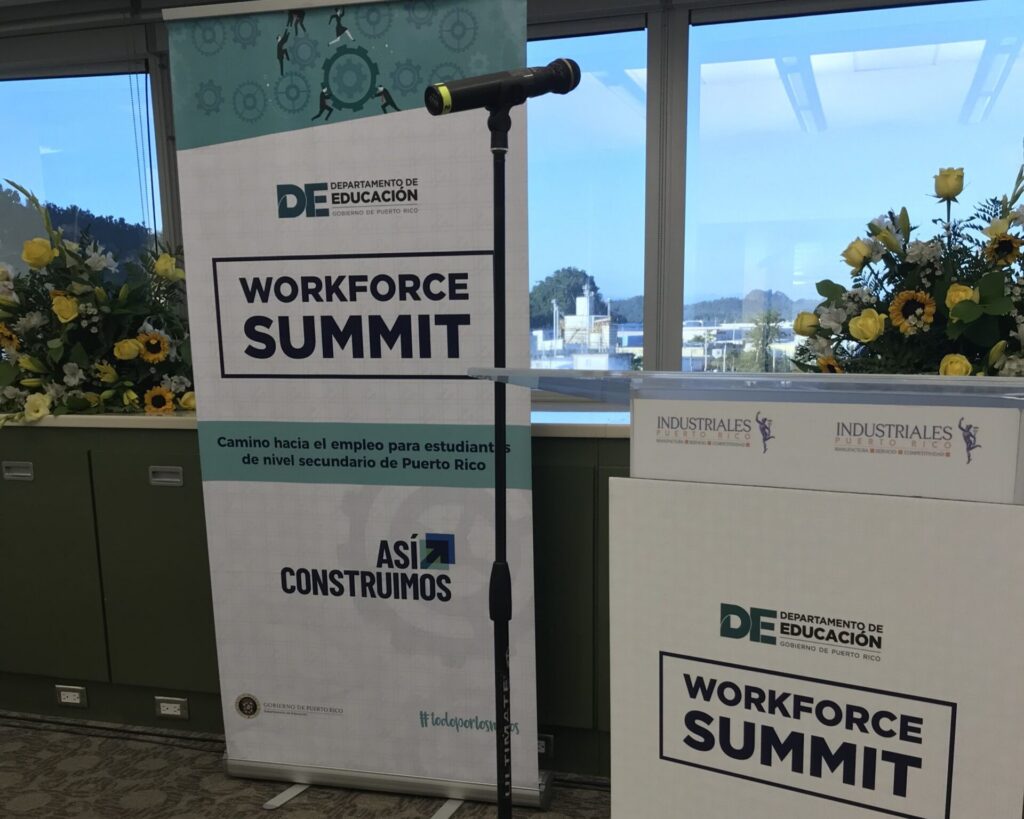
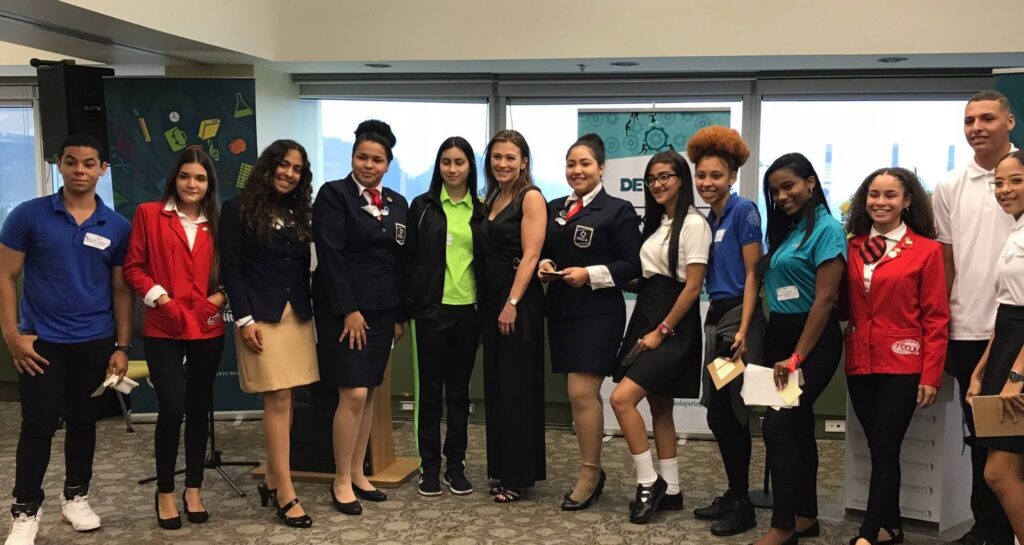
In November 2018, just over a year after the storms, we held the Puerto Rico Workforce Summit, “Camino hacia el Empleo para estudiantes de nivel secundario de Puerto Rico” (Pathways to Employment for Secondary Students of Puerto Rico). The room overflowed. The Governor attended and made clear to everyone present that this work had the full weight of the administration behind it. Julia spoke with the kind of passion that fills a room and then some.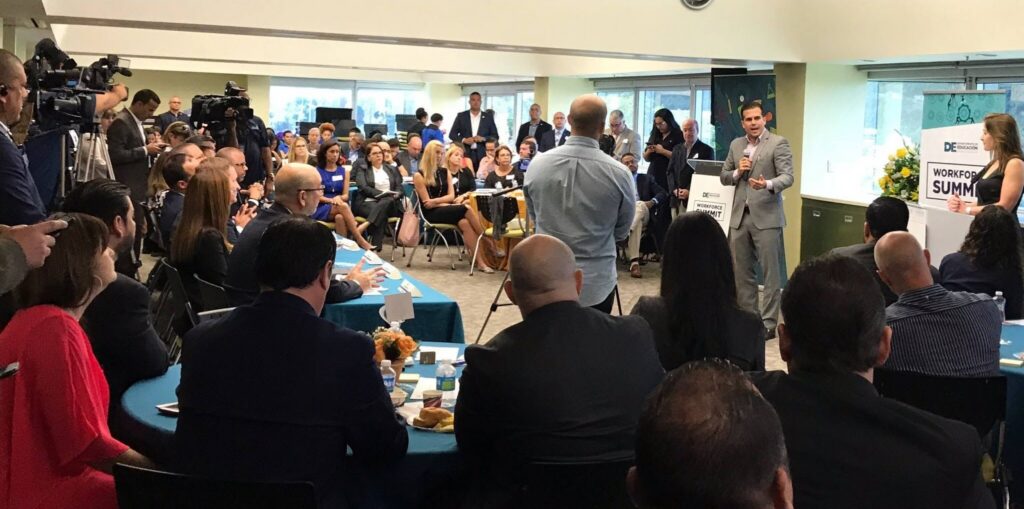
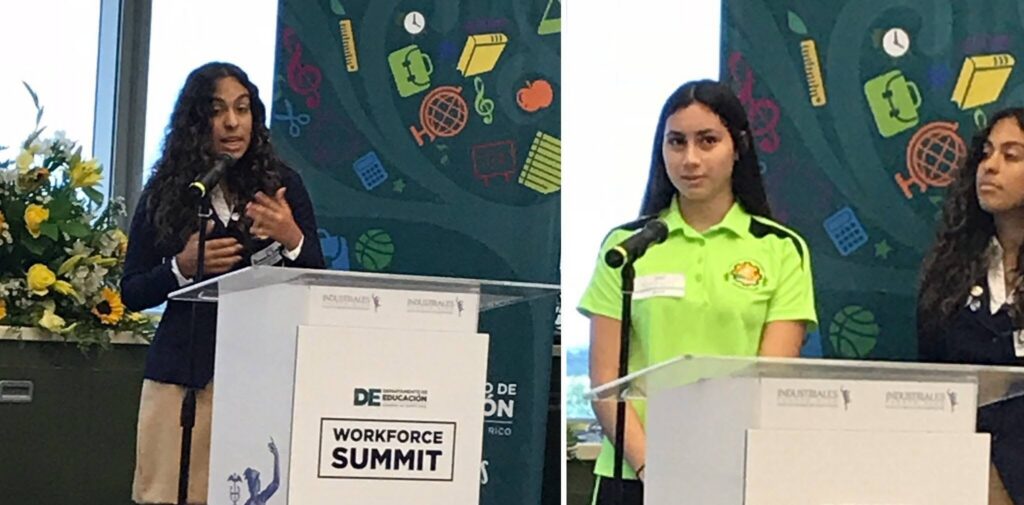
And then the students spoke.
They talked about their aspirations and their fears. They talked about friends who had left for Florida and family members who were still deciding. They talked about wanting to stay, wanting to contribute, wanting a reason to believe the island they grew up on had a future for them. I found myself in tears listening to them. Not from sadness. From the weight of what was possible if we got this right.
Employers in that room made commitments, sector by sector, to partner with PRDE to provide internships, apprenticeships, and vocational training. In the first year following the summit, more than 1,400 students were matched with employers for work-based learning opportunities. More than 800 were guaranteed a job at a living wage upon completion.
In 2019, the Clinton Global Initiative recognized the work with an Ideas Into Action award for the commitment to career pathway opportunities for Puerto Rico’s students.
The conditions that made this work necessary in Puerto Rico do not require a hurricane. Teachers leaving high-need communities for better options elsewhere is not unique to an island recovering from a disaster. Career pathways misaligned with actual labor market demand is one of the most persistent and widespread problems in workforce development across the United States. A moment of disruption that forces a choice about what to rebuild, and for whom, happens in communities that have never experienced a natural disaster. What changes the outcome in those moments is the same thing that changed it in Puerto Rico: bringing the right people into a room together, with a process built to hold all of it at once, before the moment of possibility closes.
Last year, I received an email from a young woman who had been a student participant in the summit. She is now a manager in hospitality on the island. She wrote:
“After the hurricanes, many of us felt lost and without hope. Even with so many friends leaving for Florida, I wanted to stay here. I wanted to help my family and my home. The internship I got because of you and the Secretary let me do that. This year, I have my own interns who will have that same opportunity. Thank you for everything and I hope you’ll visit again soon.”